
Oil & Gas Equipment; Brokerage, Distribution and Advisory
Equipment brokerage, distribution and advisory across the oil and gas field lifecycle; exploration and drilling support, production hardware, inspection and maintenance tooling, and the recoverable inventory that comes back out of a field at decommissioning.
Who we work with
Operators, drilling contractors, tier-one subsea contractors and decommissioning teams
National oil companies, majors and mid-cap operators running producing assets
Drilling contractors operating semi-subs, drillships and jack-ups
Tier-one subsea contractors executing SURF, IRM and well-intervention scopes
Decommissioning contractors and late-life asset teams recovering inventory
Rental houses and equipment holders serving the oil and gas supply chain
How Dockstr engages
Inside the Oil & Gas sector
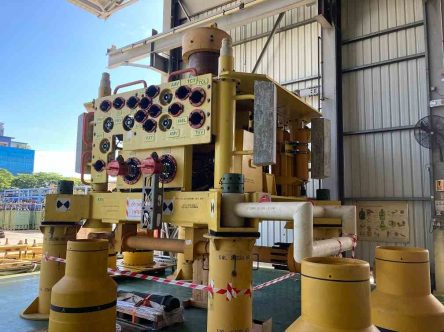
Oil and gas is a sector the desk transacts in regularly, and it is the one where the same asset can pass through our hands twice; bought into a field development, then valued and placed again when the field comes off production. Work-class ROV spreads, saturation and surface-supplied diving systems, subsea trees, manifolds, control modules and drilling support hardware all move on that cycle.
Buy-side enquiries are usually driven by a mobilisation date rather than a budget cycle, so we scope the used market and the OEM build slot side by side and let the operator choose on lead time. Sell-side work is the opposite; planned, documented and marketed to a short, qualified buyer pool that we already track by asset class and basin.
Decommissioning sits inside this sector rather than beside it. We value recoverable inventory before it enters the market, sequence what is worth marketing against what is worth scrapping, and coordinate the technical hand-off with the removal contractor. The inspection and IRM work that runs across the field lifecycle is a capability rather than a market; see Equipment Brokerage and the ROV categories for how it is served.
Typical engagements
Recent mandate patterns in this sector
01
Divestment; late-life production spread
Operator winding down a mature North Sea field engaged the desk to place recoverable subsea trees, manifolds and control modules ahead of platform removal. Documented, marketed and closed inside the decommissioning timeline.
02
Buy-side sourcing; heavy work-class ROV
IMR contractor with a short-notice mobilisation window needed a Schilling-class WROV without the lead time of a new build. Sourced a documented used system from an operator carrying surplus tonnage and closed inside three weeks.
03
Drilling support; surplus inventory placement
Drilling contractor stacking two units brought surplus riser handling, mud-system and BOP-support inventory to the desk. Split across three buyers in two regions rather than sold as one discounted lot.
04
Advisory; refinancing valuation
Lender engaged Dockstr to value a contractor’s supporting subsea equipment ahead of a refinancing. Independent fair-market-value report delivered against comparable transactions held in Meridian.
Equipment
Relevant equipment categories
FAQs
Frequently Asked Questions
What offshore oil and gas equipment does Dockstr cover?
Dockstr covers equipment across the offshore field lifecycle, including ROVs, diving systems, drilling equipment, subsea production hardware, marine equipment and associated vessels and support systems. Its market perspective spans operating assets, project equipment, surplus inventory and equipment released through restructuring or decommissioning.
Can Dockstr support the valuation of offshore oil and gas equipment?
Yes. Dockstr provides independent equipment valuations using technical assessment, current market intelligence and comparable transaction evidence. Assignments can cover individual assets, complete spreads or portfolios and can support refinancing, transactions, fleet reviews, M&A, accounting and strategic asset decisions.
Can Dockstr help sell equipment released through decommissioning?
Yes. Recoverable equipment from decommissioning programmes can be assessed before or after removal to determine potential market value, likely demand and the most appropriate divestment strategy. Dockstr’s scope can include subsea trees, manifolds, pipelines, marine assets and other recoverable offshore equipment.
Does Dockstr work with drilling contractors as well as operators?
Yes. Dockstr works with operators, drilling contractors, subsea contractors, equipment owners, manufacturers and other companies involved across the offshore field lifecycle. Support can include market research, sourcing, brokerage, valuation, divestment and broader advisory assignments.
Can equipment from oil and gas projects be redeployed into other offshore sectors?
In some cases, yes. ROVs, diving systems, survey equipment, vessels and other marine assets can have applications across several offshore sectors. Redeployment depends on technical specification, certification, condition, supportability, mobilisation requirements and demand in the target market.
Working in oil & gas?
Send a one-line description of the requirement. We will route it to the right desk and come back inside one working day.