

Imaging & Sensors · Official Distributor
See twice as far in turbid water. In real time.
Orphie subsea cameras restore visibility on the camera itself, with around 200 ms of latency. Built by i2S in Bordeaux on 45 years of imaging engineering, for ROVs, divers and deepwater tooling.
2x
Visibility distance
~200 ms
Latency
Up to 4,000 m
Depth rating
45 yrs
i2S imaging heritage
The range
Five cameras. One technology.
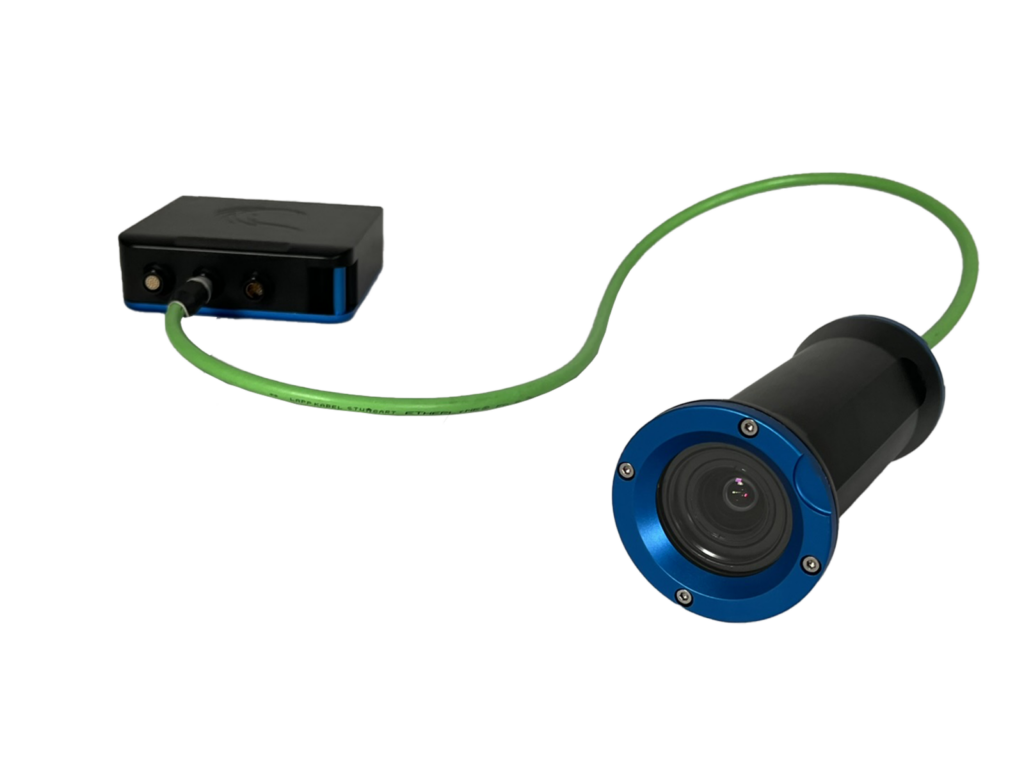
Observation-class ROVs
Orphie 300 mini
A compact camera and separate processing box for mini and observation-class ROVs, hull cleaning vehicles and arm-mounted installs where space and weight are tight.
Typical hosts: Mini ROVs, hull cleaning ROVs, manipulator-mounted views
300 m
~200 ms latency
1224 x 1024 CMOS
Optics & sensor
Sensor
2/3″ CMOS colour
Resolution
1224 x 1024
Latency
~200 ms
FOV in water
62° D / 54° H / 40° V
Lens
Tempered Borofloat
Frame rate
20 fps
Mechanical & interface
Housing
Anodised aluminium
Camera size
L 163 mm; ø 72 mm
Weight air / water
750 g / 165 g
Processing box
136 x 185 x 47 mm; 12 to 24 V; Ethernet out
Connector
Aquamouse Glenair
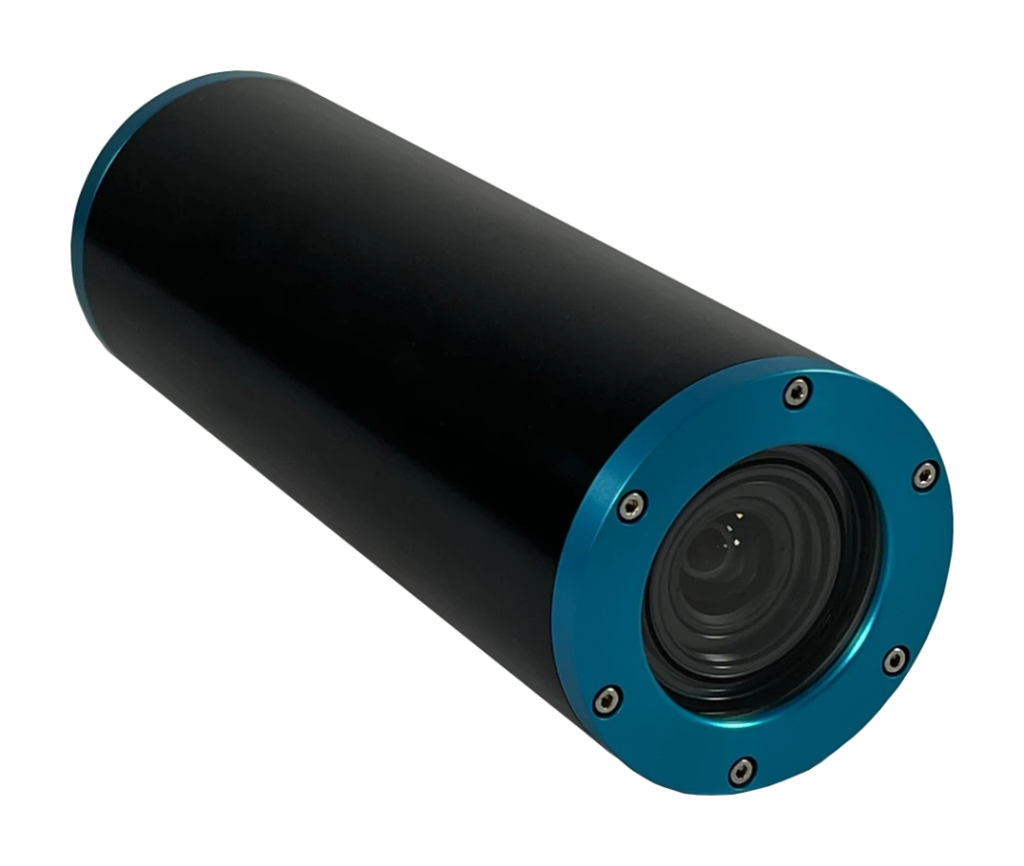
Inspection and light work-class ROVs
Orphiecam 300
Processing is built into the camera body. One Ethernet line to the vehicle, 13 W of power, and the restored image arrives topside in real time.
Typical hosts: Saab Seaeye Cougar, Falcon and Leopard class vehicles
300 m
~200 ms latency
1224 x 1024 CMOS
Optics & sensor
Sensor
2/3″ CMOS colour
Resolution
1224 x 1024
Latency
~200 ms
FOV in water
62° D / 54° H / 40° V
Lens
Tempered Borofloat
Frame rate
25 fps
Mechanical & interface
Housing
Anodised aluminium
Camera size
L 254.5 mm; ø 90 mm
Weight air / water
2.3 kg / 0.6 kg
power
12 to 32 V; 13 W max
Data
Ethernet 100BASE-T; 12 Mbit/s max
Connectors
Glenair G55 aluminium; MacArtney DBH8M
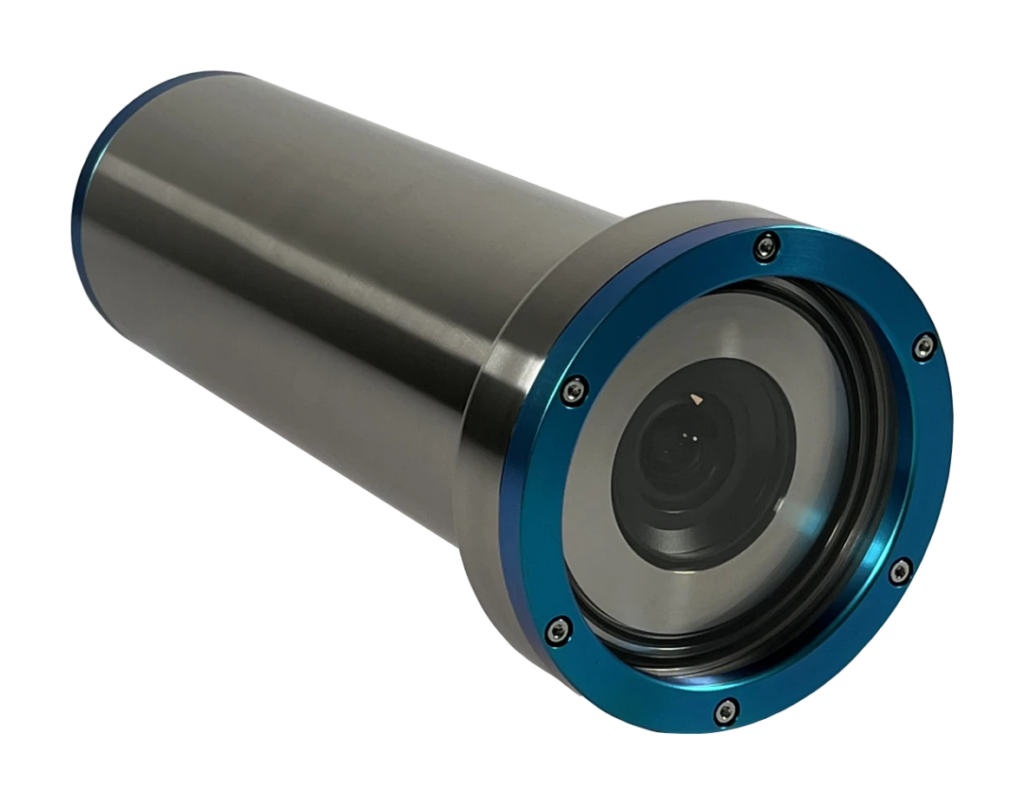
Observation-class ROVs
Orphie 300 mini
The titanium deepwater variant. The same embedded processing and Ethernet interface, rated for work-class intervention, construction support and trenching spreads.
Typical hosts: Schilling UHD and heavy work-class vehicles, trenchers
300 m
~200 ms latency
1224 x 1024 CMOS
Optics & sensor
Sensor
2/3″ CMOS colourL
Resolution
1224 x 1024
Latency
~200 ms
FOV in water
67° D / 59° H / 48° V
Lens
Tempered Borofloat
Frame rate
25 fps
Mechanical & interface
Housing
Titanium
Dimensions
L 275.5 mm; ø 116 mm
Weight air / water
4.5 kg / 2.5 kg
power
12 to 32 V; 13 W max
Data
Ethernet 100BASE-T; 12 Mbit/s max
Connectors
Ultra-deepwater work-class ROVs
Orphiecam 4000
The same titanium build, embedded processing and Ethernet interface as the Orphiecam 3000, rated to 4,000 m for ultra-deepwater intervention and survey support.
Typical hosts: Schilling UHD and heavy work-class vehicles, trenchers
4,000 m
~200 ms latency
1224 x 1024 CMOS
Optics & sensor
Sensor
2/3″ CMOS colour
Resolution
1224 x 1024
Latency
~200 ms
FOV in water
67° D / 59° H / 48° V
Lens
Tempered Borofloat
Frame rate
25 fps
Mechanical & interface
Housing
Titanium
Camera size
L 275.5 mm; ø 116 mm
Weight air / water
4.5 kg / 2.5 kg
Power
12 to 32 V; 13 W max
Data
Ethernet 100BASE-T; 12 Mbit/s max
Connectors
Glenair G55 titanium; Seanet
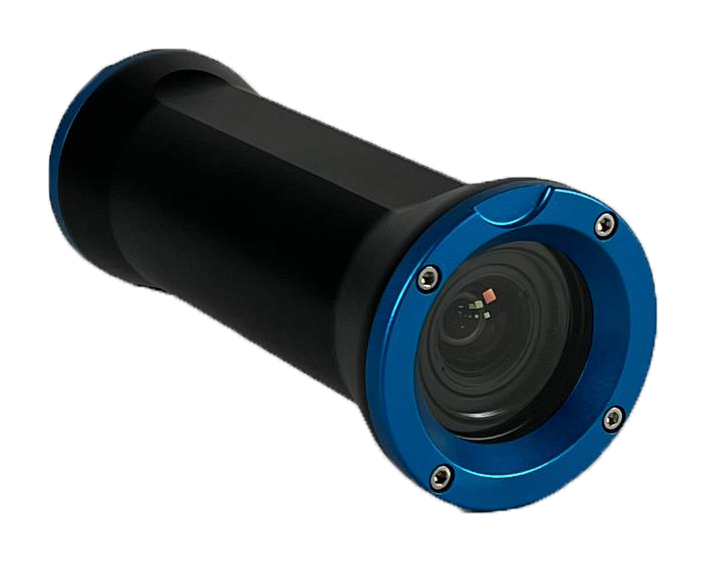
Commercial divers
Orphiescaph
A helmet-mounted camera on a 100 m cable to a topside processing box with HDMI and Ethernet out, plus audio in. The supervisor sees more than the diver does.
Typical hosts: Surface-supplied helmets; port, hull and civil inspection
Diver rated
~200 ms latency
1224 x 1024 CMOS
Optics & sensor
Sensor
2/3″ CMOS colour
Resolution
1224 x 1024
Latency
~200 ms
FOV in water
62° D / 54° H / 40° V
Lens
Tempered Borofloat
Frame rate
20 fps
Mechanical & interface
Housing
Anodised aluminium
Camera size
L 163 mm; ø 72 mm
Weight air / water
750 g / 165 g
Processing box
136 x 136 x 44 mm; 12 to 24 V
Outputs
HDMI, Ethernet; audio in
Cable
100 m
The technology
Smart processing, built into the camera
A specialised sensor, an onboard electronics card and patented real-time image processing. One technology runs across the whole range, configured from a single software, Orpheo.
At least 2x visibility
Measured against standard cameras in turbid water; procedure stamped by Bureau Veritas.
~200 ms latency
Restoration runs on the camera in real time, so pilots fly on the processed image.
Plug and play
Ethernet out, 12 to 32 V in. Fits existing vehicle telemetry without topside hardware.
Low light
Specialised sensor holds detail where conventional cameras fall into noise.
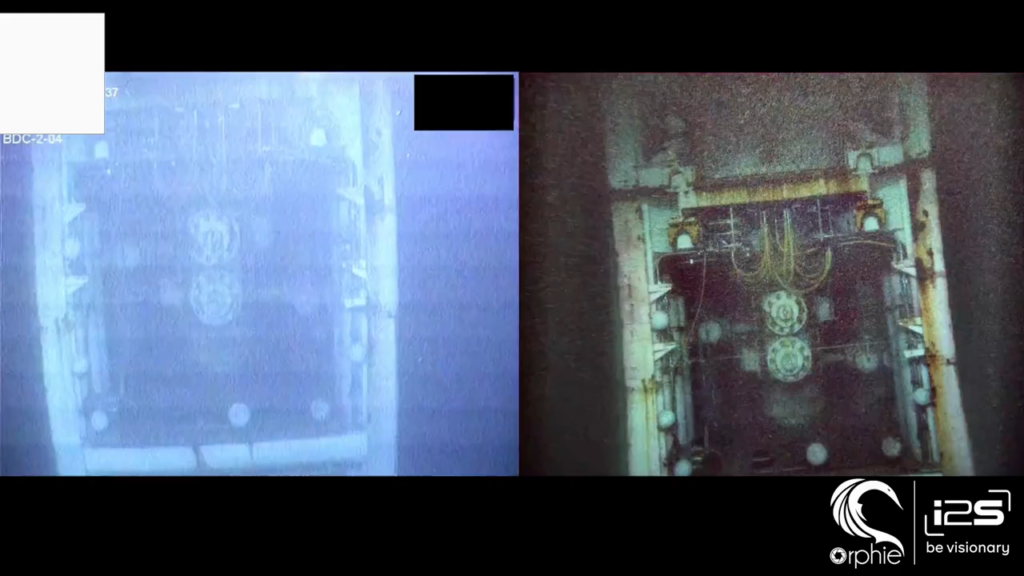
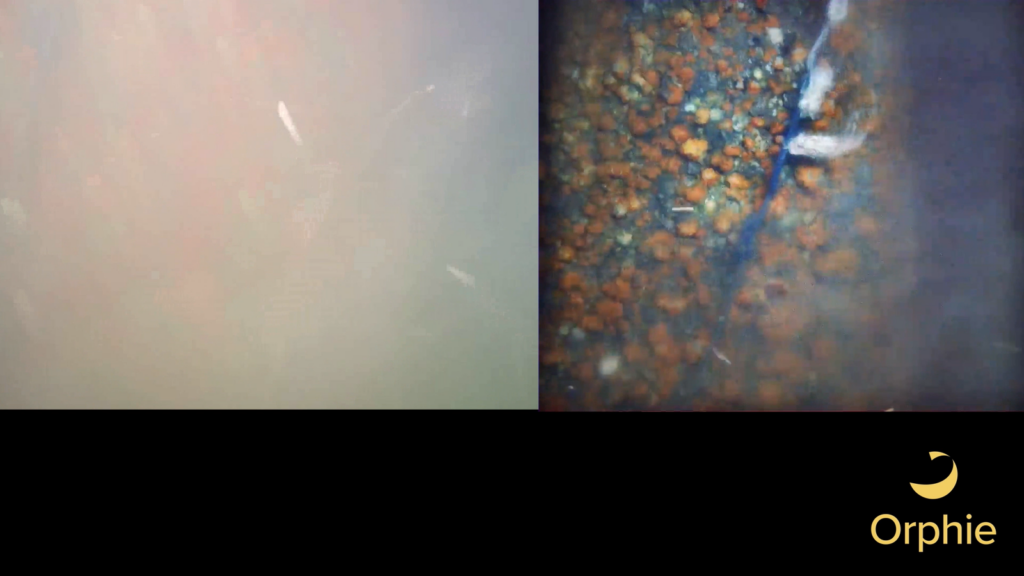
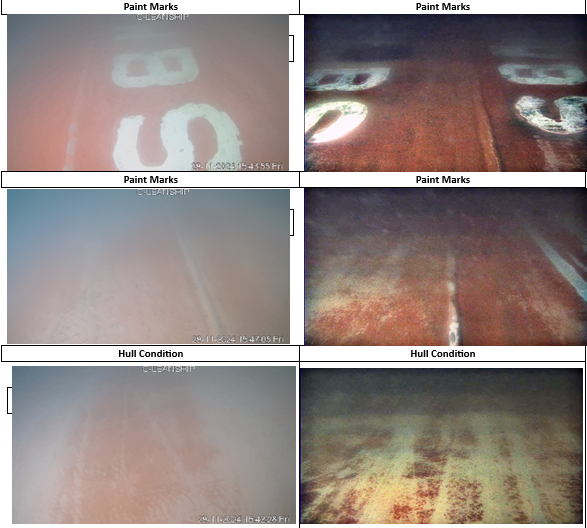
Standard vs Orphie
2x farther. 2x clearer.
Tested from 8 to 23 NTU turbidity, Orphie outperforms both standard cameras and the human eye.
Orphiecam 3000
Schilling UHD
Heavy work-class ROV
Orphiecam 300
Saab Seaeye Cougar
Front camera array
Orphiescaph
Surface-supplied diver
Helmet mount
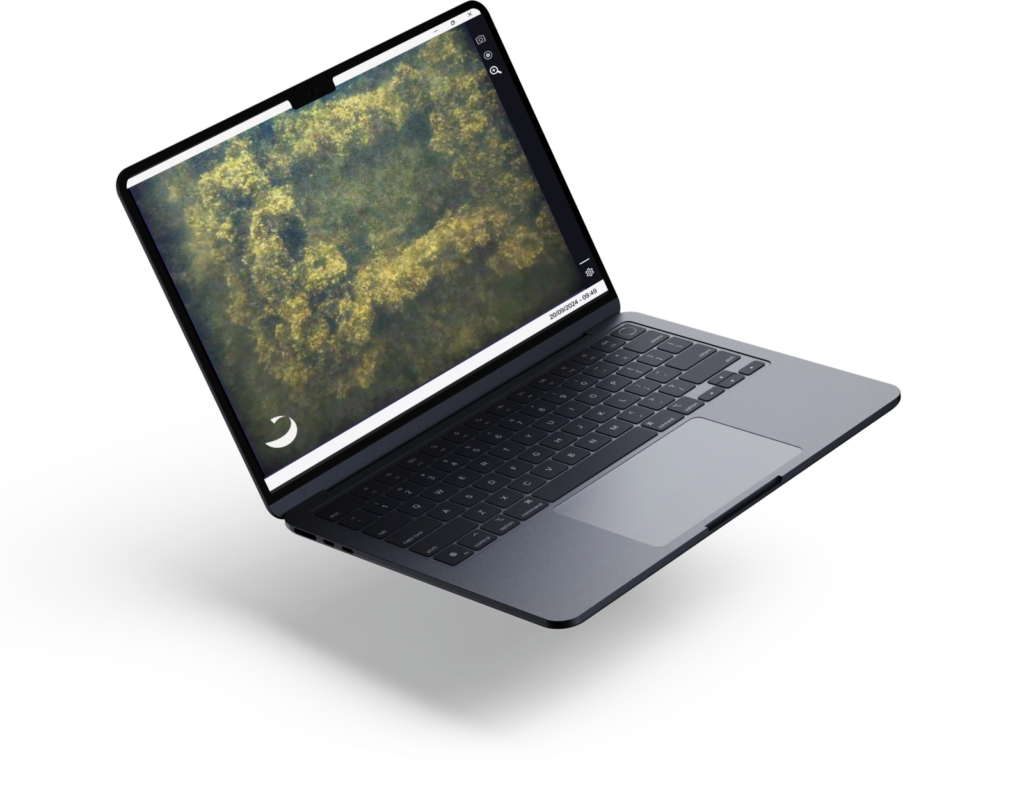
Orpheo software
Every parameter from one screen
“Modernised interface built directly around operators and field requirements. The late 2026 Orpheo 4.0 release introduces multi-camera management, switchable clear and turbid visibility modes, universal digital zoom, and flexible system updates; continuous, long-term image quality enhancement configured from one screen.”
Made in France
Designed in Pessac, built in Cestas; 90 staff, 40 engineers, optics clean room.
Every unit tested
Leak and pressure tests on all cameras; spares and after-sales from the factory.
Fielded by
Operators who choose Orphie
Wind farm, pipeline, cable and hull inspection programmes across Asia, the Middle East, Europe and the Americas.
Speak with our commercial team
Orphie cameras go onto vehicles and helmets already in service. Dockstr matches the right model to your ROV, diver spread or tooling, and handles the commercial side with i2S.
